Alignment workshops, what are they?
A knowledge-alignment workshop is a practical way to get everyone on the same page—both about the project itself and about each other’s perspectives.


Workshops generate energy, ideas, and plenty of sticky notes. But what happens when the room empties and you're left with walls of insights and half-formed solutions? This is where synthesis becomes your most valuable skill.
Once the workshop is complete, synthesis is the process of making sense of the mix of information. It's like solving a puzzle, where each piece of information leads to a bigger picture that provides a clear understanding of businesses' and users' needs and challenges.
Effective Synthesis helps us make informed choices and advance a project by developing user-connected design. The outcome of this process is a deliverable artifact, presented in a simplified and condensed format to stakeholders and team members, documenting this critical part of the project.
Without proper synthesis, even the most productive workshop can become just an expensive conversation. The real value lies in distilling diverse perspectives, conflicting priorities, and complex challenges into actionable insights that everyone can align behind.
Good synthesis serves multiple purposes. It can:
Start by collecting all workshop materials, photos of whiteboards, digital notes, recorded insights, and any artifacts created during sessions. Don't rely on memory; capture everything while it's fresh.
Review the information systematically, looking for recurring themes, common pain points, and shared priorities. What ideas appeared multiple times? Where did participants show strong agreement or disagreement?
Organise insights into meaningful categories. This might be based on user journey stages, business priorities, technical constraints, or any other framework that best serves your project goals.
Transform raw information into clear, actionable insights. Each insight should be specific enough to guide decisions and broad enough to inform multiple aspects of the project.
Before finalising, check your synthesis with key workshop participants. Did you capture the nuances correctly? Are there important details you missed?
Delivering the synthesis, the distilled outputs of the alignment workshop, isn't the end of the process. Once the findings are shared and everyone has agreed that these reflect the essence of the alignment workshop, we take concrete steps to move the project forward.
This could include user interviews to validate our assumptions. It could also involve delving into analytics or benchmarking competitor sites to understand the broader landscape and confirm our direction.
Using our clarified goals, we could create wireframes for a revised homepage layout, develop a prototype to test menu structures, or explore visual brand design directions that reflect our newly aligned understanding.
We often audit existing web content to identify gaps in alignment with user needs. We might also take smaller actions, such as mapping out content priorities or rewriting a key landing page to more clearly define the organisation's value proposition.
At this stage, we also need to know what's possible. We might, for example, evaluate current capabilities in your CMS against future project requirements, or identify technical constraints that could impact our design decisions.
It's important to set parameters. This boundary-setting includes actions such as defining our success metrics, establishing a testing roadmap to validate design decisions, and agreeing on the MVP scope to avoid scope creep.
These actions are practical, cross-disciplinary steps that move the project forward and keep it grounded in what the team has aligned on.
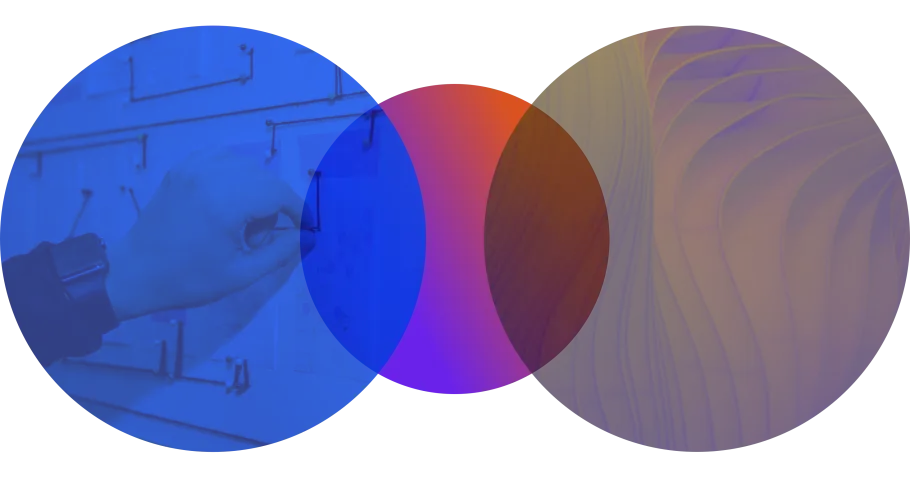
The best synthesis in the world won't help if it gets buried in email threads or forgotten in shared drives. Consider these approaches to keep your insights alive:
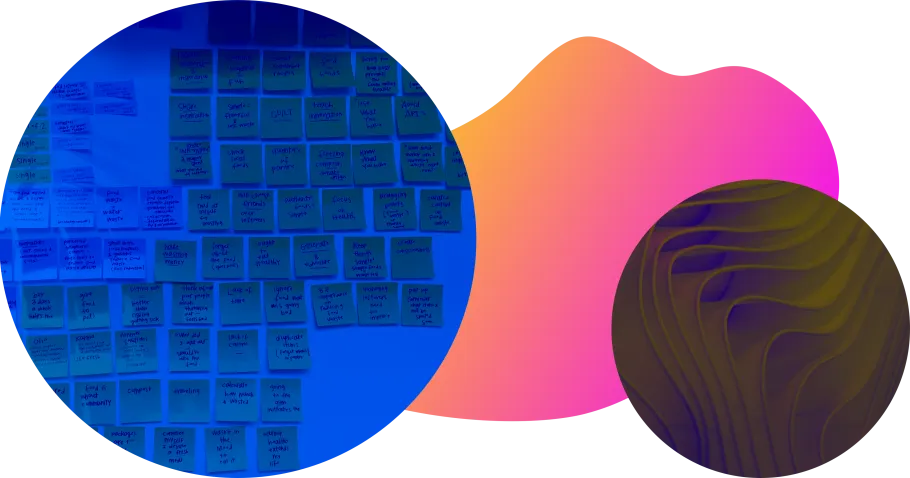
When done well, synthesis creates a ripple effect throughout the project. Teams make faster decisions because they have clear criteria. Stakeholders feel heard because their input shaped the direction. And most importantly, the final outcome serves users better because it's grounded in genuine understanding rather than assumptions.
In this way, we ensure we're constantly looping back to that all-important, foundational starting point, the alignment workshop. Synthesis isn't just about organising information; it's about creating a shared foundation that supports everything that follows.
The magic isn't in the workshop itself, it's in what you do with the insights afterwards.
A knowledge-alignment workshop is a practical way to get everyone on the same page—both about the project itself and about each other’s perspectives.
We’re all accustomed to Drupal's power, reliability, and security. Now, Drupal CMS is joining the fray. Its mission is to transform how businesses, marketers, and content creators build and manage impactful digital experiences.

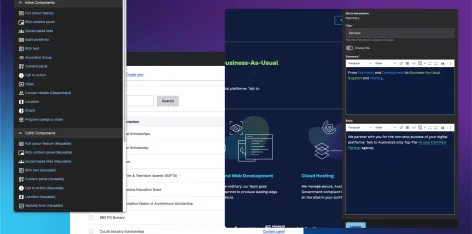
Over the past few years of working on large-scale Drupal projects for government and higher education, I have noticed how successful these new platforms are when developers include three key features in shaping the tech stack.
