
Why PreviousNext signed Drupal's Manifesto for an Open Future

We recently added PreviousNext's name to "A Manifesto for an Open Future," joining 15 other Drupal agency founders and leaders in a public declaration that open source, not closed platforms, is the foundation for the future. Since founding PreviousNext in 2009, we've built our business on that premise, so signing felt less like adopting a new position and more like putting our name to something we've already been doing for 17 years.
The manifesto's core conviction is: "we are here to help build a resilient civilisation, and to build it in the open." The nine statements that follow reinforce that open source code becomes a refuge as trust in proprietary technology erodes; data sovereignty stops being optional; structured content becomes the raw material machines reason best on; that security earned through a quarter-century of public scrutiny counts for more than self-reporting by proprietary vendors.
We didn't need much convincing to sign. PreviousNext consistently invests 5% of our annual revenue by contributing to Drupal's codebase and community as Australia's only Top Tier Drupal Certified Partner, ranking in the top five global contributors to Drupal's open source project. From helping formalise the DrupalSouth Steering Committee through the 2010s and volunteering on the Drupal Association board, the manifesto's call to support the wider Drupal community across competitive lines is the essence of the commitment we already have.
The manifesto asks signatories to commit to four things: contribute; support each other; tell the story of what open source makes possible; and meet the moment with courage instead of retreating into nostalgia. For us, our contribution is a budget item, not a marketing spiel. We keep sharing Drupal best practices rather than treating them as a competitive advantage to hoard. We're letting the world know about Drupal's innovation, like we just did alongside other Drupal Certified Partners at a major government conference. We're ambitious contributors to Drupal's evolution, rather than assuming 25 years of Drupal's legacy settles all arguments.
That last point matters most for our clients. While most of the industry conversation around AI has been about which platform is the newest and shiniest, machines reason best on content that's modelled, labelled and meaningful, which is what Drupal has spent decades getting right. As more of our clients start integrating AI into their platforms, that structure is the difference between AI that actually understands content rather than guessing at it. Sovereignty works the same way: Drupal carries no licensing cost, we can modify and enhance every line of code we build on, and clients own their platform outright (while hosting on Australian-based infrastructure), something PreviousNext's clients already expect and benefit from. From a security perspective, Drupal's codebase is available for any researcher to inspect and is overseen by a global security team that PreviousNext team members play an active role in.
If you're a Drupal agency, hosting provider or product team that shares this view, the manifesto is still open for signatories at https://drupal-open-future-manifesto.com/. If you're a client wondering what our commitment to open source principles means for your own projects, please get in touch.
Related Articles
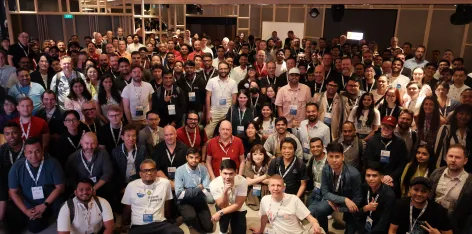
The real business benefits of Drupal contribution
Drupal contribution is often considered a direct cost by agency leaders, but PreviousNext has proven that contribution is a key investment in business sustainability and profitability.
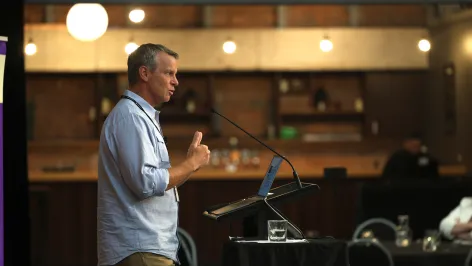
How Drupal is keeping pace with a changing digital market in 2026
I recently gave a talk at DrupalSouth Wellington 2026 covering something a lot of us in the Drupal community have been wrestling with: has the past couple of years been a market correction or something more fundamental? And more importantly - how can Drupal remain competitive in a CMS market that's changing quickly?
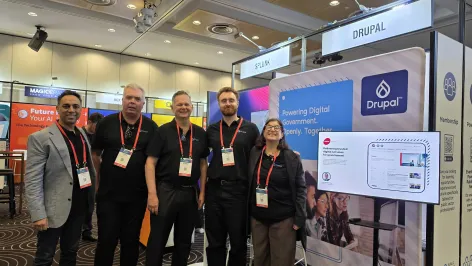
Drupal's certified partners unite for NSW government showcase
Last week, PreviousNext joined forces with fellow Drupal Certified Partners Annex, Morpht and Salsa Digital for a shared booth at the Public Sector Network's Government Innovation Showcase in NSW. We came together to show government agencies what Drupal has to offer, including Drupal CMS, AI, security, and content governance.
