
Ping responsibly - Modern workplace messaging matters

You probably feel like you’ve got it covered, but workplace messaging etiquette is one of those topics where some people secretly wish others would revisit the basics, while assuming they themselves are doing just fine.
Whether your team uses Slack or Teams, the same (unspoken) rules apply. Think of this as a friendly, judgement-free reminder.
Your messages are a professional artefact
We don’t normally stop to think about this, but every message sent at work is a professional representation of ourselves. Instant messaging can feel casual, but it still exists within a professional context. It's searchable, shareable, and often sets the tone for how you're perceived by the people you work with. A clear message signals a sharp, clear thinker. A rambling, context-free wall of text, or one word explanations… Less so. This doesn’t mean you need to compose every message like it's for a board of directors - it just means you need to be intentional.
“Hi” is where conversations go to die
“Hey”
“Hi there 👋”
"You free?"
Sent into the void with no further information. Yes, it's well-intentioned, but it’s not efficient because the recipient knows something is coming, but has no idea what, and has to either wait or prompt you to get to the point.
So, lead with your actual message:
"Hi Tom, are you able to review the homepage copy before Thursday EOD?"
This respects the other person's time, gets to the point, and they can action it immediately.
A message without context is a notification. A message with context is communication.
Threads exist for a reason
The invention of the thread is rather thoughtful. Threads keep conversations contained and contextual (and bonus points for being searchable). A specific project channel can become noisy and cluttered quickly with scattered comms if threads aren’t used. I liken it to the insufferable and never-ending ‘reply all’ email threads we’ve all been stuck in before. While we do want people to have lighthearted or off-topic chatter, there are usually already channels or DMs devoted to that.
It’s about etiquette - if a recent thread already exists on a topic, reply in it. If it’s too old to come back to or one hasn't been started, start one. Even calling out first that you’re starting a thread is useful. Future you, scrolling back to find a key piece of info or a decision that was made weeks ago, will be so grateful.
The Goldilocks zone
Writing a well-crafted workplace message is a skill, and getting it ‘just right’ lives somewhere between the one-word reply and the essay that should have been an email. ‘Polished brevity’ is what I call it - people are busy and notifications can be relentless. But, being too brief creates its own chaos. Vague messages lead to follow-up questions, which leads to more messages, and you end up with the exact inefficiency you were trying to avoid in the first place.
The sweet spot is being clear and succinct. Before you send, ask yourself: does this message give the recipient everything they need to understand what you're saying, or what you need, why, and when? If you find that you’re needing to type paragraphs, consider whether a call or an email might be more suitable. In some cases, both the message and the call are essential. And if you’re a fastidious introvert like me, you’ll perfect your words in the hopes that a call isn’t required!
Read the room
Messaging is great for quick, low-stakes communication, but not everything can be typed out or resolved in a few exchanges. Conversations involving emotions, feedback, complex problems, convoluted details are examples where messaging will likely make things worse. The moment you notice a conversation getting longer or maybe even more tense, that's your cue to stop and suggest a video call, or to pick up your phone (or walk over to someone's desk). Knowing when not to message is its own kind of communication skill.
You knew most of this already, but I wasn’t trying to make you learn new rules. Messaging etiquette is about maintaining good habits in an environment that's designed to move fast and cut corners. Clear, considerate communication potentially means time saved, confusion avoided, and more space for work that actually matters.
I hope this little refresher prompts even just one less context-free "Hi" in your organisation's channels.
Tagged
Related Articles
How much does a polar bear weigh?
Check out my video for the polar punchline! Icebreakers are an invaluable tool for building and strengthening relationships, but people sometimes dread them. I’m going to change your mind and show you their true potential.
AI is out to get you. Or is it?
Whether you’re hesitant or confused about the role of generative AI in writing for your business, or you’re a devotee turning to ChatGPT for every line and snippet, there is a way to use AI to your advantage without compromising the quality of your content.

Three features for creating a great website experience
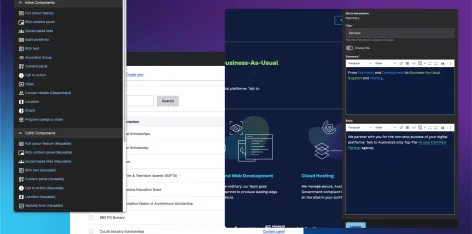
Over the past few years of working on large-scale Drupal projects for government and higher education, I have noticed how successful these new platforms are when developers include three key features in shaping the tech stack.
